The Complete Guide to Pallet Sizes and Specifications
Pallets are the backbone of modern supply chain operations, yet their importance is often overlooked in procurement and logistics discussions. The pallet size you choose affects freight costs, warehouse efficiency, inventory management, and ultimately, product safety during transit and storage. Despite handling billions of pallets annually across North America, most purchasing managers and warehouse directors don't fully understand the range of pallet size options available or how to match specifications to their specific operational needs.
For over 45 years, Hallwood Enterprises has engineered pallets for operations ranging from small regional distributors to Fortune 500 manufacturers. Working with 75+ mill partners and managing over 230 truckloads per week across 30+ states, we've seen firsthand how the right pallet specification can streamline operations while the wrong choice creates bottlenecks, waste, and unnecessary expense. This guide distills decades of industry expertise into practical guidance for selecting and specifying pallets that work harder for your business.
The GMA Standard: 48" x 40"
The 48" x 40" pallet established by the Grocery Manufacturers Association (GMA) is the dominant standard across North America, and for good reason. This specification emerged from decades of optimization within retail and food distribution networks, and it remains the most widely used pallet size in the continent.
The 48" x 40" dimensions were engineered to maximize space utilization within standard shipping containers, trucks, and warehouse racking systems. A 48-inch length aligns perfectly with standard pallet rack depths, while the 40-inch width accommodates two pallets side-by-side within a 96-inch wide trailer with minimal waste space. This geometric precision translates directly into cost savings — fewer trucks needed per shipment, higher density in storage facilities, and standardized handling equipment across facilities.
The GMA pallet dominates in retail distribution, grocery operations, consumer goods manufacturing, and general merchandise logistics. If your products move through mainstream retail channels, automotive aftermarket distribution, or traditional grocery supply chains, you're almost certainly using 48" x 40" pallets. The weight capacity for a standard GMA pallet typically supports 2,500 pounds of dynamic load (weight while in motion on forklifts or pallet jacks) and up to 4,500 pounds of static load (weight at rest in storage).
The widespread adoption of the 48" x 40" standard creates significant operational advantages. Equipment standardization means lower costs for material handling machinery. Cross-docking facilities can process pallets without reconfiguration. Return logistics are simplified because nearly every shipper and receiver has compatible equipment. When you specify a 48" x 40" pallet, you're choosing compatibility with the established infrastructure of North American logistics.
Other Common Pallet Sizes
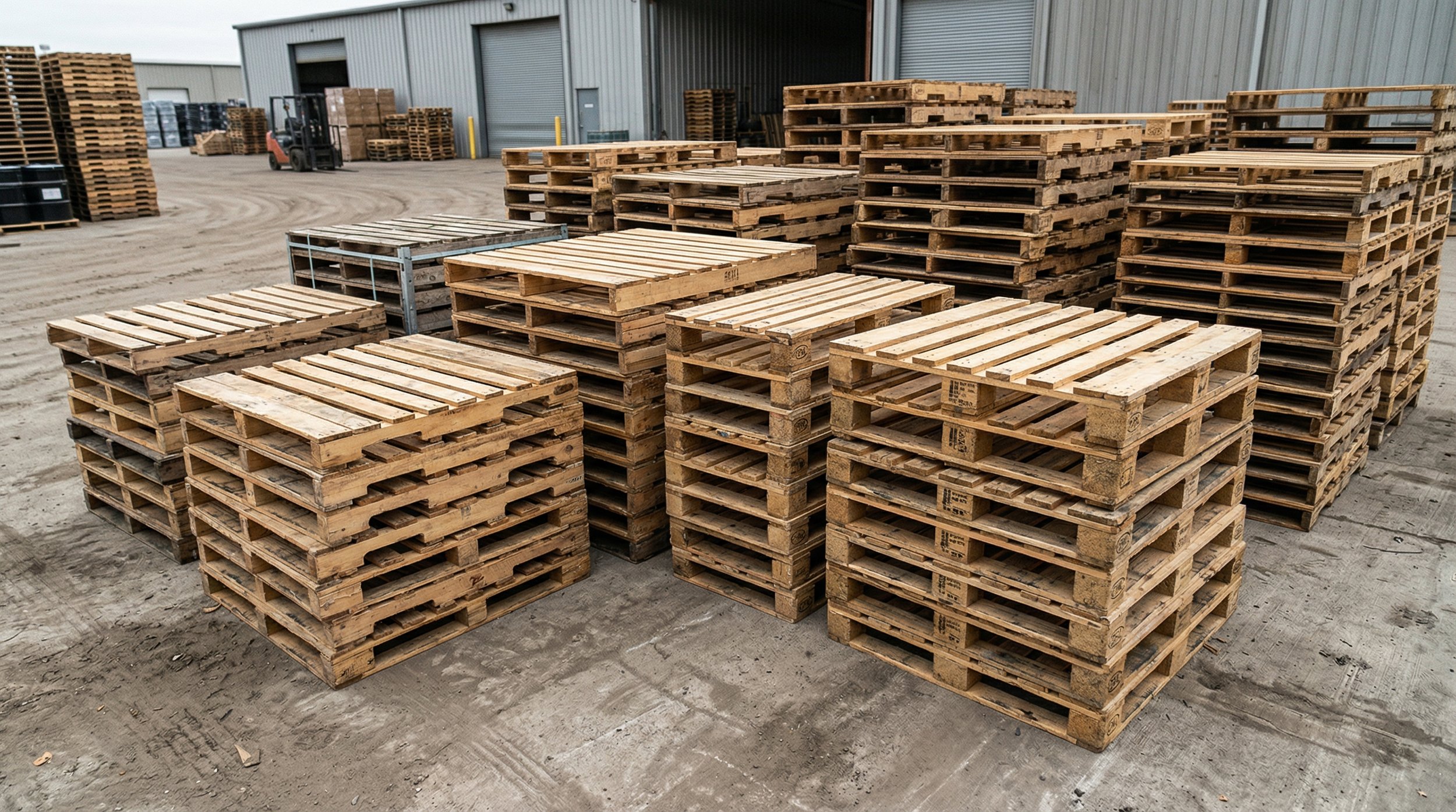
While the 48" x 40" standard dominates, specialized industries and regional markets have developed alternative specifications that better serve their unique requirements. Whether you're exploring new versus recycled pallet options or considering different materials and sizes, understanding these alternatives helps you optimize your supply chain.
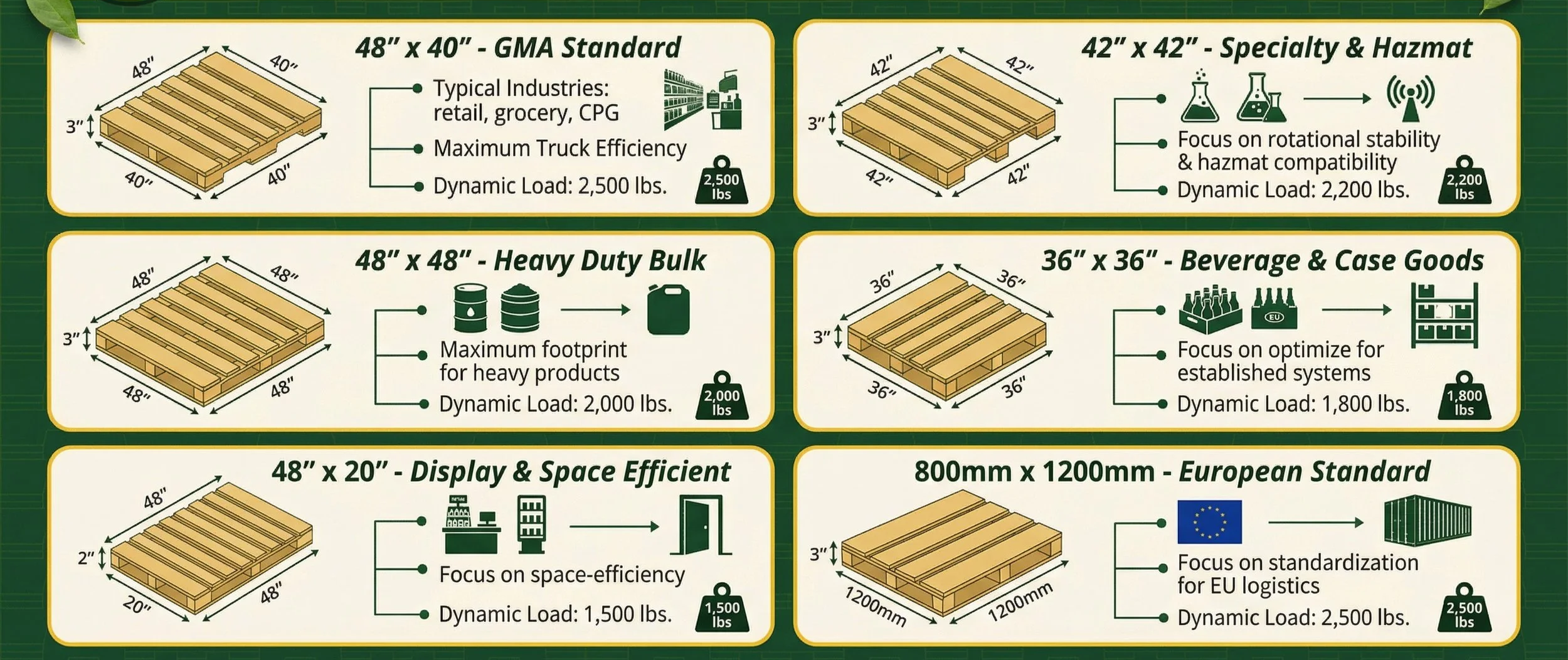
The 42" x 42" pallet has become standard in industries requiring excellent stability and rotational flexibility. Chemical manufacturers, paint distributors, and telecom equipment suppliers frequently specify 42" x 42" pallets because the square footprint allows 360-degree access for inventory rotation and inspection. These pallets also perform well in overseas shipping containers where European standardization influences specifications. The square configuration reduces tip-over risk for tall stacks of drums or barrels, making it the preferred choice for hazardous materials handling.
The 48" x 48" pallet represents the maximum size that still fits efficiently into standard shipping containers and trucks. This larger format accommodates drum storage, barrel stacking, and bulk container shipping. Industries moving heavy, lower-velocity products often choose 48" x 48" because the additional footprint area distributes weight more evenly, reducing stress on forklift arms and pallet jacks. However, the larger size also requires specialized handling equipment and reduces the number of pallets per truck, so it's typically chosen only when the product characteristics justify the additional logistics complexity.
The 36" x 36" pallet has maintained a strong market position in beverage distribution for decades. The smaller footprint accommodates case stacks that fit precisely within warehouse racks designed for this dimension. Beverage distributors rely on 36" x 36" specifications because their products, case counts, and warehouse infrastructure were all optimized around this size. Changing to a different standard would require capital investment in new racking systems, forklift attachments, and storage layouts.
The 48" x 20" pallet serves an important niche in retail operations, smaller manufacturers, and light-duty storage. This narrow format slides easily through doorways and fits into compact storage areas that standard pallets cannot access. Retail display specialists often use 48" x 20" pallets for point-of-purchase setups and seasonal merchandise. Small operations with space constraints frequently standardize on this dimension to maximize facility utilization.
Euro pallets, measuring 800mm x 1200mm (approximately 31.5" x 47.2"), dominate European and international trade. If your products move through European distribution networks or containerize into ocean freight bound for international ports, Euro pallet compatibility becomes essential. Many mid-sized manufacturers maintain the ability to produce both GMA and Euro pallets to serve different market segments without disrupting supply chain efficiency.
When You Need Custom Pallet Sizes
Standard pallets serve the vast majority of supply chain operations efficiently, but specialized applications demand custom pallet engineering. Understanding when standard solutions become limiting helps avoid costly supply chain disruptions.
Oversized equipment and machinery represent one of the primary drivers of custom pallet specifications. Industrial equipment manufacturers, construction machinery suppliers, and heavy equipment distributors frequently work with products that exceed standard pallet dimensions. A custom pallet designed specifically for a particular piece of equipment maximizes stability, minimizes shifting during transit, and accommodates the weight distribution characteristics of that specific product. At Hallwood, our engineering team designs hundreds of custom specifications annually, matching pallet dimensions, deck board spacing, and reinforcement patterns to the exact needs of the product being shipped.
Odd-shaped or irregular products demand specialized pallet solutions. Furniture manufacturers shipping uniquely configured pieces, textile mills handling rolled goods of specific widths, or glass manufacturers requiring custom deck configurations all benefit from engineered custom solutions. Rather than forcing irregular products into standard pallets where they shift or risk damage, a properly designed custom pallet provides complete product protection while maximizing transportation efficiency.
Export requirements frequently necessitate custom specifications. International shipping standards, container dimensions in specific regions, and local logistics infrastructure may all demand pallet sizes that differ from North American standards. Container optimization becomes critical when shipping to overseas markets; a pallet specification that maximizes utilization within a 20-foot or 40-foot container can reduce freight costs significantly over high-volume shipments.
Aerospace and military applications operate under rigorous specification requirements. These industries demand documented engineering analysis, material certifications, and precise manufacturing tolerances. Pallets for these applications aren't simply larger or smaller versions of standard designs; they're engineered systems with specific load distribution requirements, documented weight capacities, and material traceability meeting government procurement standards.
Hallwood's engineering team has developed the expertise to specify the exact pallet your product needs. With access to 75+ mill partners and extensive experience across 30+ states and hundreds of industries, we can evaluate your product dimensions, weight, handling characteristics, and transportation requirements to engineer a solution that meets your specifications while maintaining cost efficiency. Custom doesn't mean expensive, it means optimized for your specific application.
How to Choose the Right Pallet Size
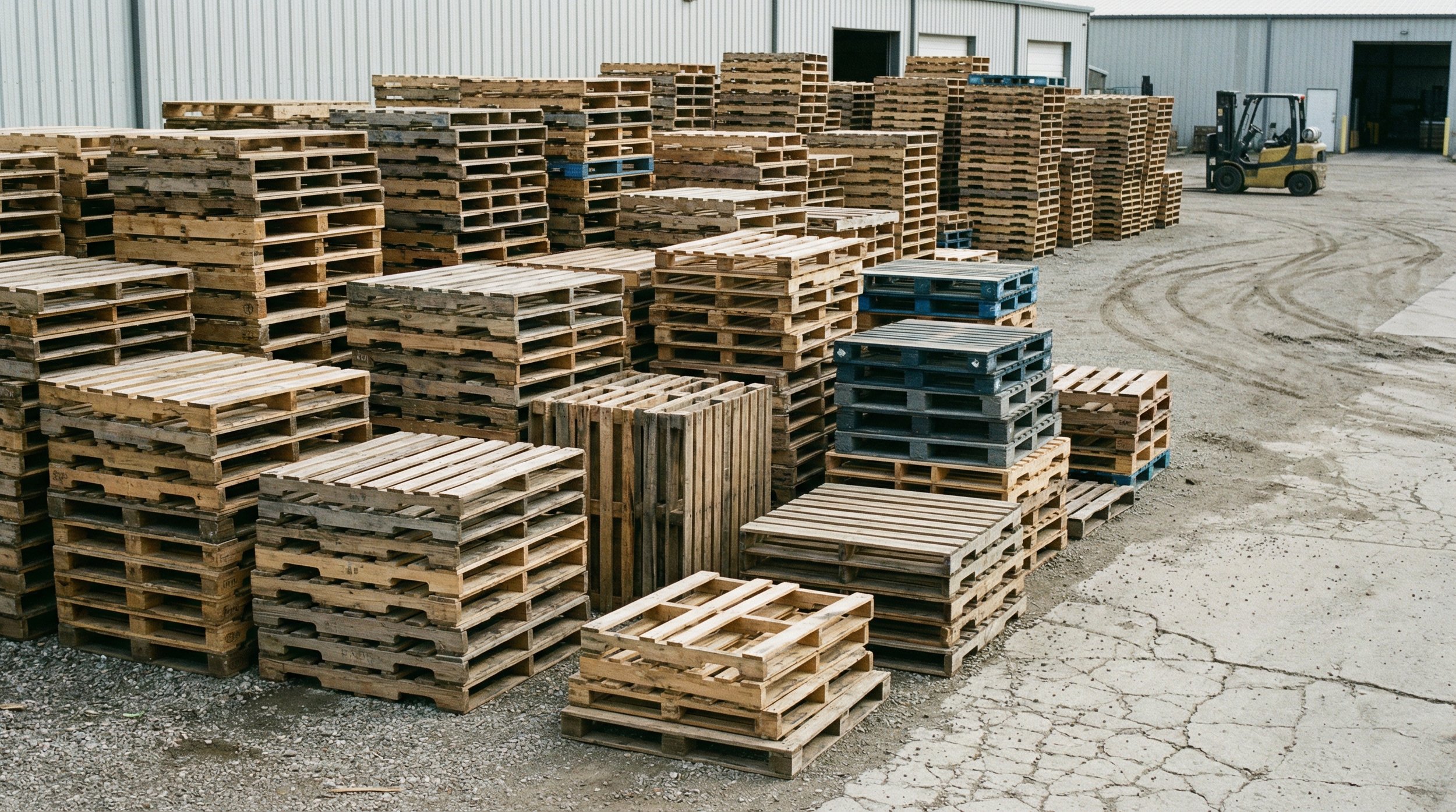
Selecting the correct pallet specification requires systematic evaluation of multiple operational factors. Beginning with product characteristics and ending with return logistics strategy ensures you choose specifications that support rather than constrain your supply chain.
Start with product weight and physical dimensions. How much does your product weigh, and what is its footprint when loaded onto a pallet? Does your standard case or container size have natural affinities with particular pallet dimensions? A 40-inch wide pallet might accommodate three cases across precisely, while a 48-inch pallet would create wasted space. Similarly, heavy products may require larger pallet footprints to distribute weight safely within material handling equipment weight ratings.
Truck and container optimization represents the second critical evaluation. How many pallets fit into your standard shipping vehicle? A 53-foot trailer accommodates different quantities of 48" x 40" pallets versus 42" x 42" pallets. For ocean freight, how efficiently does your pallet specification pack into a 20-foot or 40-foot container? Freight costs often decrease per unit when pallet specifications maximize container utilization. This calculation must account for your typical shipment sizes and frequency — daily shipments across the country benefit from different optimization strategies than monthly full-container-load exports.
Your existing warehouse racking system constrains pallet selection. Pallet racks are engineered for specific dimensions. Installing 48" x 48" pallets into racks designed for 48" x 40" pallets may exceed weight ratings or create dangerous overhang situations. Conversely, you may have invested in racking that accommodates one specific pallet size, and standardizing on that dimension maximizes utilization of your capital equipment.
Stacking requirements affect pallet selection. Some products tolerate multi-tier stacking; others require single-layer arrangement. The number of pallet layers you can safely stack influences warehouse space requirements and therefore the total cost of ownership for your pallet specification. A pallet that allows four-tier stacking requires half the floor space of one that permits only two tiers.
Distinguishing between one-way and return operations fundamentally affects specification strategy. One-way pallets that don't return from customers allow lighter-duty construction, reducing material costs. Return pallets that cycle through your own network or customer locations must withstand multiple handling cycles, requiring more robust engineering and material selection. Hallwood manages pallet operations for companies operating both return systems (managing pallets owned by the shipper) and one-way systems (pallets left with receivers), and we engineer specifications differently for each scenario.
Pallet Material Options
Pallet material selection represents the intersection of product requirements, cost targets, and durability expectations. Understanding material characteristics ensures you specify pallets that protect your product throughout its supply chain journey.
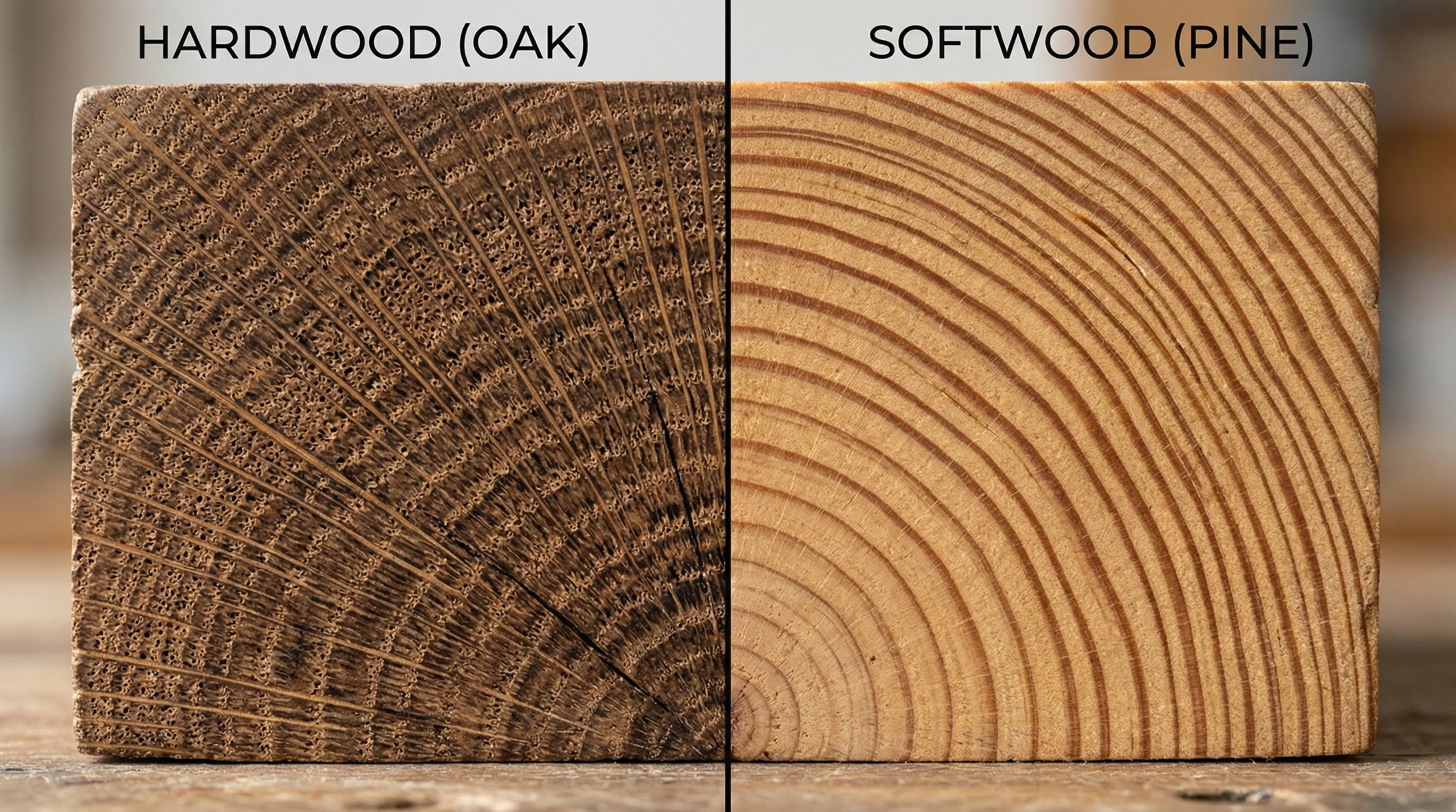
Hardwood pallets constructed from oak or maple deliver maximum durability and load capacity. These materials withstand repeated handling cycles, resist weathering in outdoor storage, and accommodate the heaviest products. Industries handling machinery, metal products, or products moving through multiple supply chain partners typically standardize on hardwood specifications. The initial material cost exceeds softwood alternatives by 20-40%, but the longer service life and reduced damage claims often justify the investment for high-value or sensitive products.
Softwood pallets constructed from pine or spruce balance cost-effectiveness with sufficient durability for most applications. These materials weigh less than hardwood, reducing overall shipment weight and transportation costs. For one-way operations or products with limited handling, softwood specifications provide excellent value. The material handles standard handling equipment, supports typical weight loads, and costs less than hardwood alternatives. Most GMA standard pallets in mainstream retail distribution use softwood construction.
Combination builds pairing hardwood main beams with softwood deck boards optimize both cost and performance. The hardwood structure provides load-carrying capacity and durability, while softwood decking reduces material costs. This approach works well for mid-range applications where load requirements exceed softwood capacity but full hardwood construction isn't justified by the application.
Pressure-treated lumber specifications become necessary for pallets exposed to moisture, chemicals, or outdoor storage. Food processors, chemical manufacturers, and agricultural operations often require treated wood meeting specific pest and decay resistance standards. Treatment processes add cost but ensure pallet integrity in challenging environments.
Engineered wood and composite materials represent emerging alternatives in specialized applications. Laminated wood construction, plastic components, and hybrid materials address specific industry requirements. Export to regions with strict phytosanitary regulations sometimes necessitates heat-treated or composite alternatives to solid wood. These materials cost more than traditional wood but simplify international shipping compliance.
Not Sure Which Size or Material? Let Hallwood Help.
Pallet size selection represents a strategic decision affecting transportation costs, warehouse efficiency, handling safety, and product protection. The 48" x 40" GMA standard serves the majority of North American supply chains efficiently, but understanding when specialized dimensions serve your operations better requires systematic evaluation of product characteristics, logistics infrastructure, and operational requirements.
At Hallwood Enterprises, we've spent 45+ years engineering pallets for operations of every size across 30+ states. Managing relationships with 75+ mill partners and coordinating 230+ truckloads per week, we understand the real-world constraints and opportunities in pallet specification. Whether you're optimizing established logistics networks or launching new products requiring custom solutions, our team applies decades of industry expertise to engineer specifications that work harder for your business.
The right pallet specification isn't determined by guesswork or generic industry practice; it's engineered to match your specific products, operations, and supply chain requirements. Visit Hallwood's solutions page to explore your options, or contact Hallwood's team today to discuss your pallet needs and discover specifications that optimize your logistics efficiency and cost structure.